


Programmatic job advertising earned its reputation for a good reason. In short, it’s extremely helpful. It replaced the copy-paste drag of manual posting with technology that speeds up multi-channel job posting and helps recruiting teams maximise their budgets.
If you’ve read our breakdown of manual vs. programmatic job advertising, you already know how recruiting teams end up outgrowing manual processes (and opting for programmatic solutions instead.)
Yet, not all programmatic job advertising tools are built equal.
Hirematic is often lumped under “programmatic platforms,” and while that’s not entirely wrong, it’s incomplete and shortsighted. Programmatic is just one aspect of what Hirematic delivers – but its capabilities span beyond that.
If you’re evaluating recruitment technology tools and see Hirematic as a simple programmatic solution, this article will clarify what else it has to offer.
We’ll dive into:
A Quick Refresher on Programmatic Job Advertising
Programmatic recruitment advertising is built on four pillars: budget allocation, candidate targeting, live optimisation, and performance monitoring. These tools typically involve you setting a campaign budget, which the algorithm distributes across best-fit channels, and later redistributes based on live performance.
These real-time reallocations offer a significant improvement over manually rebalanced budgets, which are typically sporadic and limited by recruiter bandwidth.
But besides freeing up recruiter time and increasing their efficiency, programmatic recruitment advertising comes with other benefits, such as faster time-to-hire and a higher volume of better-fit candidates to name a few.

Want to find out why programmatic recruitment advertising is all the rage?
Read the top 10 benefits of programmatic recruitment advertising here.
This is where programmatic recruitment advertising tools come to a halt, though. While they answer “where should this budget go right now?” they don’t account for the full scope of running recruitment advertising end to end.
Where Pure Programmatic Platforms Fall Short
Most programmatic recruitment tools are built around performance-based channels. That is, cost-per-click (CPC) and cost-per-applicant (CPA) job boards like Indeed and ZipRecruiter. While programmatic optimises these well, your channel mix is rarely limited to these channels.
A typical recruitment advertising stack also includes:
- Pay-per-slot or credit-based job boards, where you buy a fixed number of postings rather than bidding per click (e.g., Reed, CV-Library)
- Social channels like LinkedIn, Facebook, or Instagram, which behave differently to job boards
- Existing contracts and credits with specific boards that a recruiting team has already committed budget to
A programmatic-only platform typically doesn’t account for – or touch – any other part of the recruitment advertising stack besides performance-based channels, leaving recruiters to manage those on the side.
This means two parallel systems running at the same time: one that’s automated, and one that isn’t – which ends up defeating the point of automating to begin with.
What Hirematic Adds on Top of Programmatic
Hirematic comes with a built-in programmatic engine, but that’s just one layer, and part of a larger pool of features that standard programmatic solutions don’t include.
That is:
- Pay-per-performance and pay-per-slot channels under one system
- Adjustable control levels
- AI job ad intelligence
- Aimed distribution, not spray-and-pray
- Full-funnel visibility
- One contract for access to all job boards
Pay-Per-Performance and Pay-Per-Slot Channels Under One System
Hirematic brings together all channel types under one roof – which includes folding in your existing job board contracts into the system.
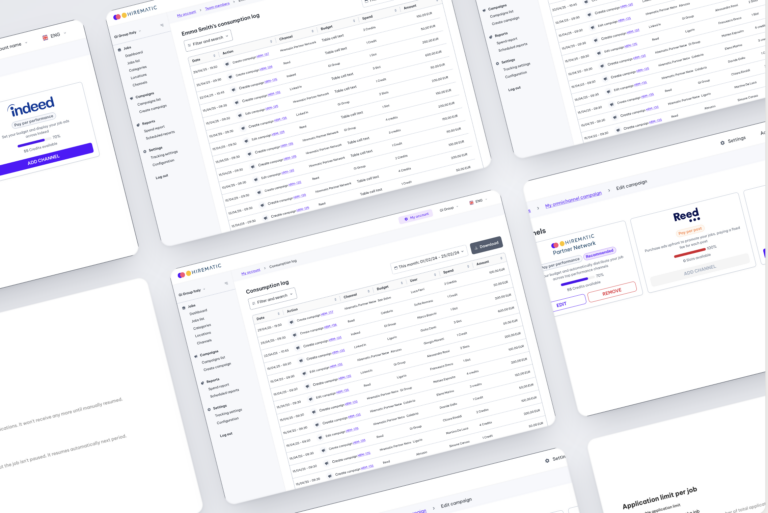
For pay-per-performance channels, Hirematic’s AI automatically allocates the overall budget, with spend determined before campaigns run – not after. For pay-per-slot or credit-based job boards, you can decide which channels to use and how much to allocate. All of this data lives inside a single system and dashboard so nothing has to be managed on the side.
Adjustable Control Levels
Most programmatic tools are black and white. They come with full automation, which recruiters can take or leave. For some recruitment managers, though, delegating decision-making to algorithms and AI can feel uneasy. This is why Hirematic treats control as a dial, not a switch.
In Hirematic, you can specify how many credits or budget you want allocated to the Hirematic Partner Network before running campaigns. If your team’s swamped with work, you can also hand off the performance layer to our intelligent AI algorithm entirely.
Control doesn’t stop at the budget, either. CV Limits let you cap how many applications a role collects, so a campaign stops itself once it’s hit a manageable number. That is, control over what comes out the other end, not just what goes in.
However you configure your choice, Hirematic is there to execute it.
AI Job Ad Intelligence
We’ve talked about Hirematic’s programmatic optimisation layer, but not its AI copywriting intelligence features.
Before publishing an ad, Hirematic offers industry-specific, trialed-and-tested job ad suggestions covering:
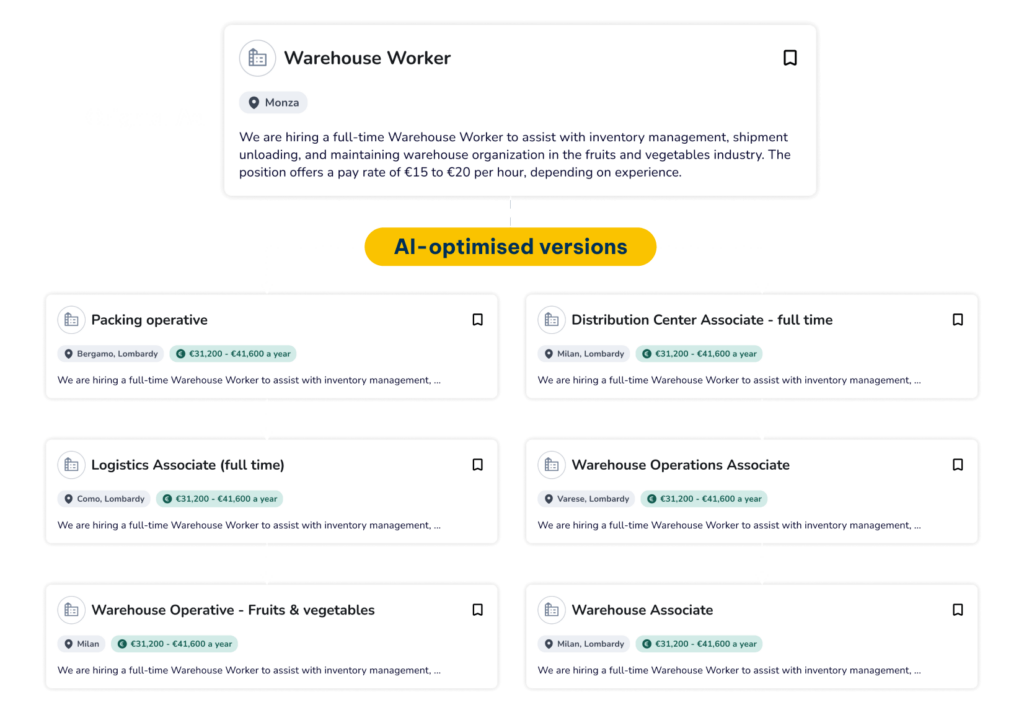
- Alternate titles which recommend job titles that can shift application rates more than most recruiters expect
- Geo-targeting suggestions which use historical performance data to pinpoint where the applicants are likely located
- Bias detection which flags language in your job ad that could discourage qualified candidates, supporting fairer, more inclusive hiring practices
All of these improve the ad itself, not just where it’s shown.
Aimed Distribution, Not Spray-and-Pray
Rather than posting your job ads to whatever channel’s available, Hirematic sifts through its partner network of hundreds of niche and general job boards – across countries, industries, and role types – and automatically publishes each ad to the ones best suited to that specific role. This means less testing (and budget waste) on boards that were never going to deliver, and less guesswork.
Full-Funnel Visibility
Programmatic dashboards typically just show clicks and applications. Hirematic goes past that by tracking every stage of your ATS funnel, from job views through application, screening, and hire – with cost per application, cost per shortlist, and cost per hire calculated for each step.
This helps you see exactly where candidates drop off, and the cost this drop off entails at every stage (not just overall.) Not only that, but channel visibility means you can see which boards are earning their spend, and which are just budget drains.
One Contract for Access to All Job Boards
Job boards typically don’t come as a bundle. To advertise across Indeed, LinkedIn, and a handful of niche or regional boards, you’d normally need to keep track of a separate contract for each one. Most programmatic platforms don’t change this. They optimise spend across channels, but you’re still the one holding (and renewing) the individual agreements behind them.
Hirematic works differently: one contract and one invoice give you access to its entire job board network, so reaching a new board doesn’t mean configuring and signing a new agreement.
How Hirematic Plays Out in Practice
The customers who use Hirematic see tangible results:
- 35–50% lower cost per application through continuous, AI-led budget optimisation (Mitsubishi Electric)
- Up to 1,300% ROI, with savings ranging from €50K to $1M in recruitment spend (Grafton)
- 16,200+ applications generated in 4 months (Fortune 100 eCommerce company)
Ready to Take Your Hiring Further?
Programmatic job advertising is a genuinely useful piece of technology, and it’s what Hirematic covers. But limiting Hirematic to “just a programmatic platform” wouldn’t be right.
Instead, think of Hirematic as the operating layer for your recruitment advertising as a whole. It drives the channel mix you use, optimises your spend, lets you set the boundaries you want in place, and gives you full visibility into what’s working.
Want to see how it fits into your hiring stack? Book a demo and let us walk you through it.
