



The recruitment advertising space is not only broad, but also changing quickly. Multiposters, programmatic job advertising platforms, and other recruitment marketing tools are increasingly overlapping and expanding, blurring category lines and making it difficult to understand what each tool does at its core.
If you’re a recruiter, we understand how easy it is to get overwhelmed. This is why we’re creating a series of blog posts to better define these categories and break down the real differences between today’s recruitment advertising solutions. In this post, we’re comparing Hirematic – our programmatic recruitment advertising platform – with multiposters.
We’ll look at Hirematic vs. multiposters through the lens of:
How the Platform Works
Hirematic
Hirematic helps your hiring teams distribute job ads across channels, later optimising them continuously after they’re posted – all from one platform. The tool’s AI leans on performance data from millions of past jobs to automatically push job ads to the best-fit channels. Then, Hirematic dynamically shifts budget towards best-performing channels based on live data, as it rolls in. This makes scaling job ad volume across roles, locations, and channels easier with manual oversight no longer necessary.
Short on time? Meet Hirematic in 90 seconds.
Multiposter
Multiposters help hiring teams push job ads to their chosen channels from a single platform, relieving them of manually posting them across individual boards and channels. Multiposters let you select the channels you want to post to, then publish the ads on your behalf – without you having to log in to each channel to create the ad from scratch each time.
Key takeaway: Hirematic optimises recruitment ad performance through automated distribution + budget shifting, while multiposters simply speed up job posting across pre-selected channels.
How Jobs Are Distributed Across Channels
Hirematic
Multiposter
Key takeaway: Hirematic automatically selects the best-fit channels based on data, while multiposters rely on manual channel selection based on recruiter preference.
How Budgets Are Set and Managed
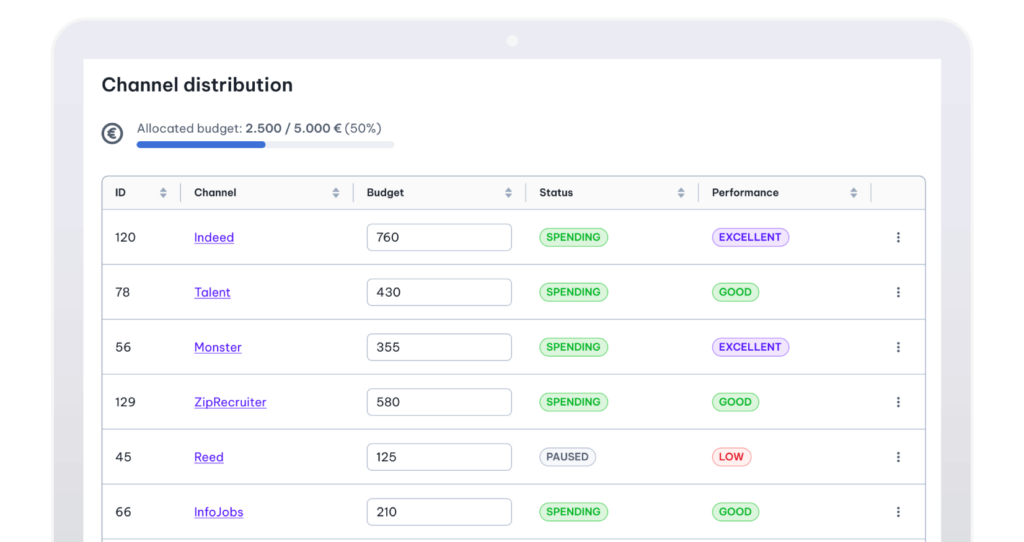
Hirematic
Multiposter
Key takeaway: Hirematic manages spend dynamically at the campaign level, while multiposters require recruiters to manage fixed budgets separately per job board.
How Job Ad Optimisation Happens
Hirematic
- Alternate titles to ensure your job ad speaks the same language as applicants
- Geo-targeting to ensure your vacancy reaches qualified applicants
- Inclusive copy suggestions to remove unintentionally biased or exclusionary language
Multiposter
Key takeaway: Hirematic continuously reallocates budget and improves performance after jobs go live, while multiposters stop at distribution and leave optimisation fully manual.
How Performance Visibility and Reporting Works
Hirematic
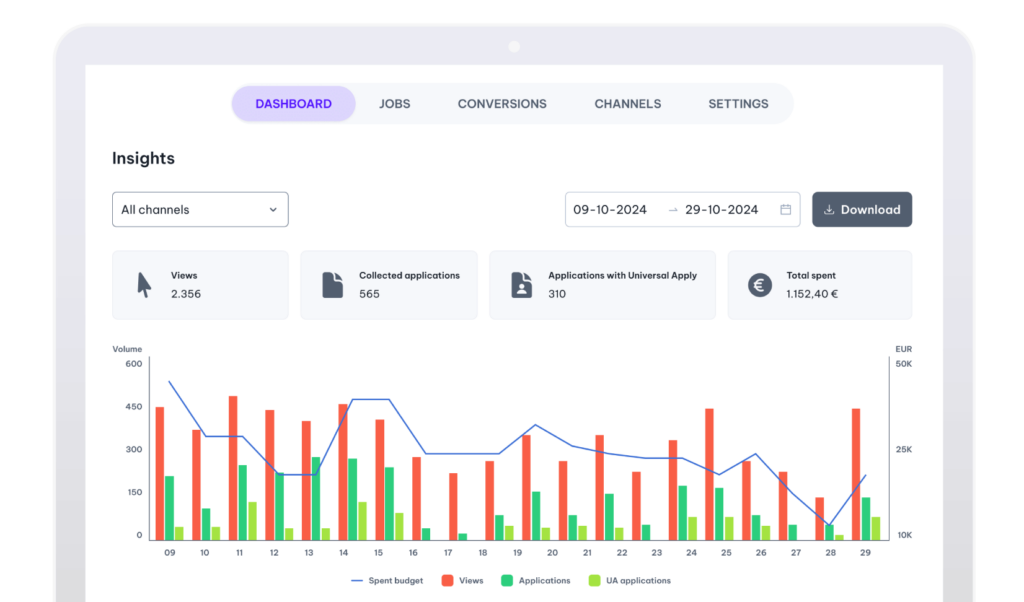
- Active campaign data – both static and dynamic – broken down by job type, category, location, or distribution channel
- Full-funnel performance tracking, from ad views to successful hires
- Comprehensive spend and performance reporting (both daily and cumulative), covering clicks, applications, and cost metrics
- Trend analysis to spot performance shifts over time and guide optimisation decisions
- Budget forecasts (projected applications, CPA, and timelines)
- Application quality funnel insights (valid vs duplicate, expired, or unqualified applications)
- Similar job benchmarks (compare CPA and application volume)
- Category and regional CPA averages
- Time-to-application benchmarks
Multiposter
Key takeaway: Hirematic provides full-funnel performance tracking and benchmarking in one dashboard, while multiposters offer limited visibility and often require dashboard-hopping for real metrics.
How Job Board Contracts Are Managed
Hirematic
Did You Know?
Multiposter
Key takeaway: Hirematic centralises job board access under one contract (while still supporting existing credits), while multiposters require separate contracts with each job board before posting even begins.
